- Author: Pedro Telleria
- Date: 01/15/26
- Website: PedroTelleria.com
- Topic: Critical-Thinking, Liberal-Mindset
- Serie: The Circle of Control (part-1)
- Version: v1.0 (2aEN)
Why can’t a society without privacy be free?
For years we’ve been told a phrase that sounds reasonable, almost reassuring: “If you’re not doing anything wrong, you have nothing to hide.”
Many people accept it without thinking. Some even repeat it. And without realizing it, by saying that phrase they give up one of the basic pillars of their freedom.
Because privacy is not a refuge for criminals.
Privacy is a protection mechanism for normal people. Ordinary people. Good people.
1. The convenient confusion: privacy is not secrecy
Let’s clarify something basic. Privacy does not mean hiding things. Privacy means being able to decide.
Decide what information is mine, who can access it, in what context, for how long, and for what purpose.
We are not talking about crimes, mafias, or dark plots.
We are talking about personal control over personal information. When that control disappears, nothing happens… at first. But the damage accumulates.
2. An observed society behaves differently
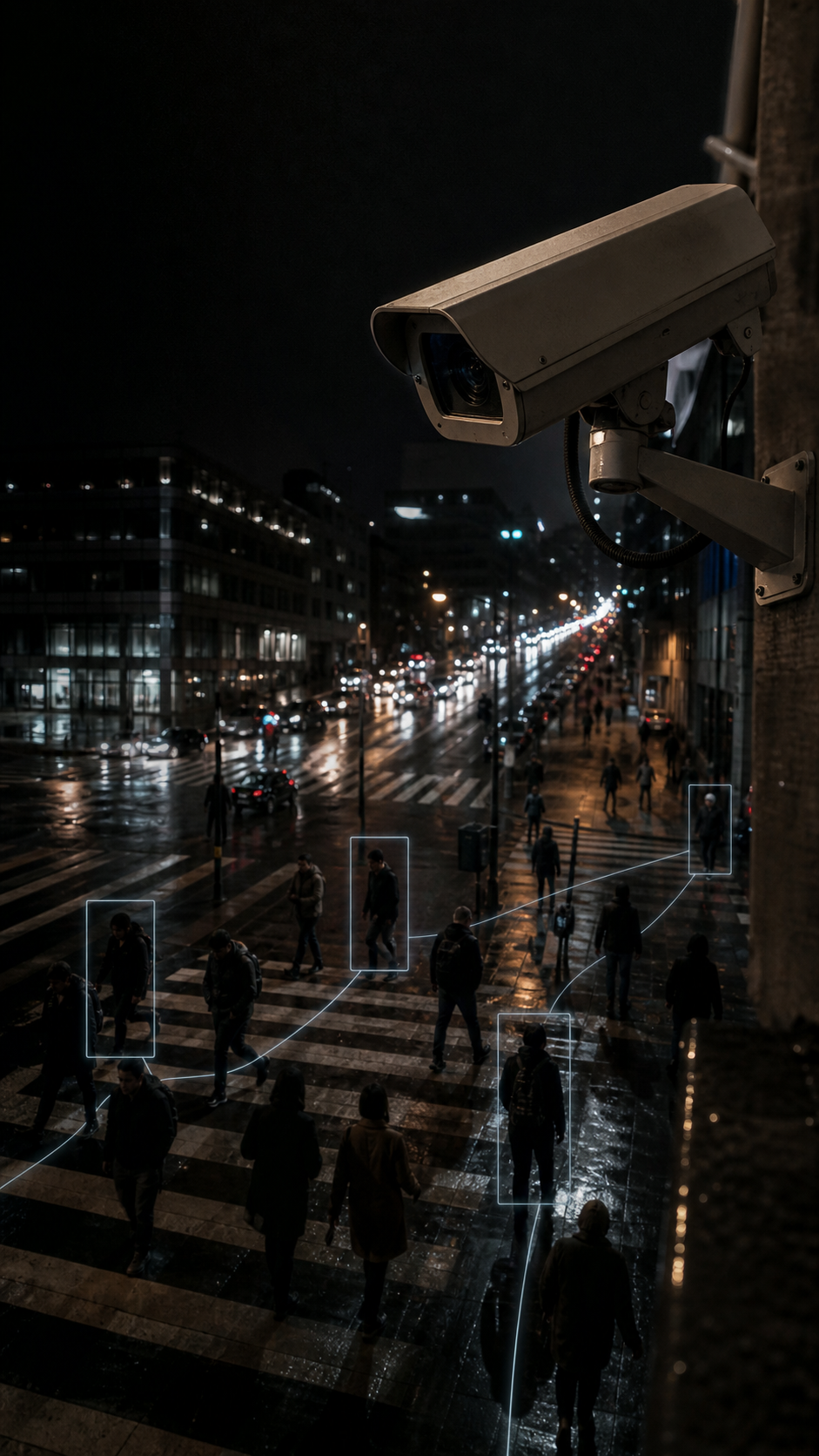
People change their behavior when they know they are being watched.
There is no need for repression. No need for punishment. Possibility is enough.
If you know that everything is recorded, everything can be analyzed, everything can be interpreted out of context, you start to self-censor. Not because you are guilty, but because you are human.
This is not theory. It has been studied for decades. Permanent surveillance reduces real freedom, even if you remain formally free.
3. The problem is not who watches today, but who will watch tomorrow
A common mistake is thinking: “I don’t care if the State has this” or “I don’t care if a company has it.”
The issue is not only who holds the data today, but who will hold it tomorrow, who will inherit it, who will buy it, who will cross-reference it.
Data does not disappear. It is stored, copied, sold, leaked, hacked. And when that happens, there is no way back.
4. Private companies: power without a face, power without a vote
Companies like Facebook or Google are not States. They were not elected. They are not accountable to citizens.
Yet they know what you read, what you buy, what you search, what you think, who you talk to, where you are. Often they know more about people than governments do. And this is by design.
The problem is not just that they have data. The problem is that they cross it.
5. Data cross-referencing: where privacy dies
A single data point says little. Ten cross-referenced data points say a lot. A thousand describe you better than you describe yourself.
The profile builds itself. And once built, it is never fully erased, never truly forgotten.
This is no longer about privacy. It’s about power asymmetry.
6. Biometric surveillance: the body as a permanent identifier
Identification used to rely on things you could change: passwords, documents, numbers.
Now it relies on what you physically are: face, iris, voice, gait, fingerprints, DNA.
If a password is stolen, you change it. If your biometric identity is stolen, there is no replacement.
A society based on total biometric identification is a society with no technical escape.
7. “Why worry if you’re not doing anything wrong?”
Privacy does not protect the guilty. It protects the innocent from abuse, error, and excess power.
It may not matter to you today. Tomorrow the political, economic, or social context may change.
History is full of ordinary people who suddenly became “problematic.”
8. The silent effect: obedience without coercion
Modern control does not need violence. It needs data.
When a system knows what motivates you, what you fear, what you need, it can guide you without forcing you.
That is far more effective than classic repression—and much harder to detect.
9. Privacy and freedom: a direct relationship
Without privacy, freedom of expression weakens, dissent becomes costly, critical thinking cools, personal autonomy shrinks.
Privacy is not a luxury. It is the mental and vital space where freedom is formed.
10. Not paranoia. Power structure.
Talking about privacy is not technological paranoia. It is understanding how power works in the 21st century.
Whoever controls information, identity, and money controls behavior.
When those converge, freedom becomes conditional.
11. Closing: the right question
The question is not “What do I have to hide?”
The right question is “Who decides what can be known about me?”
If the answer is not you, you are not fully free.
This article does not aim to scare, but to awaken.
Because privacy is not for criminals. It is for citizens.
And a society that renounces it, slowly renounces everything else.
Comments
Anonymous comments are allowed. Have an account? . New here? .